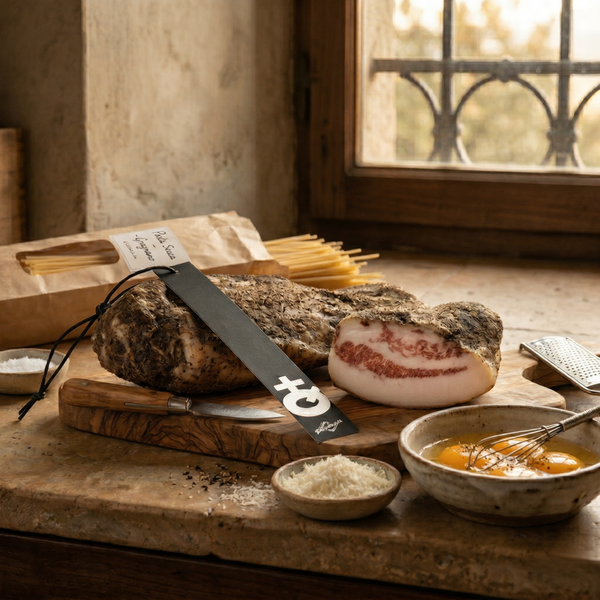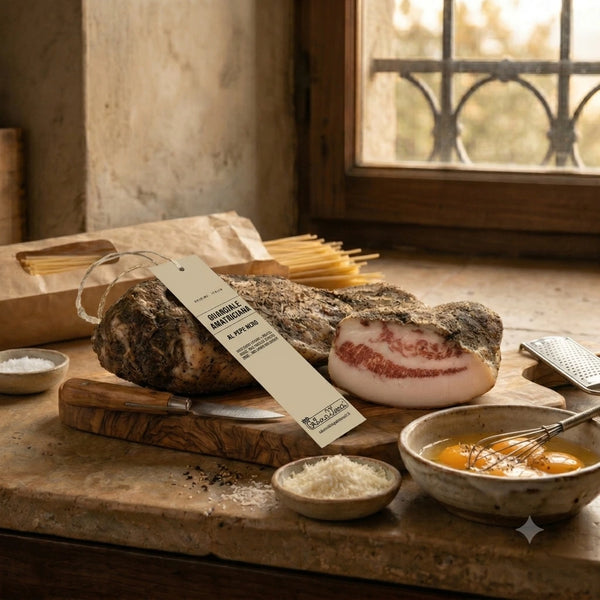
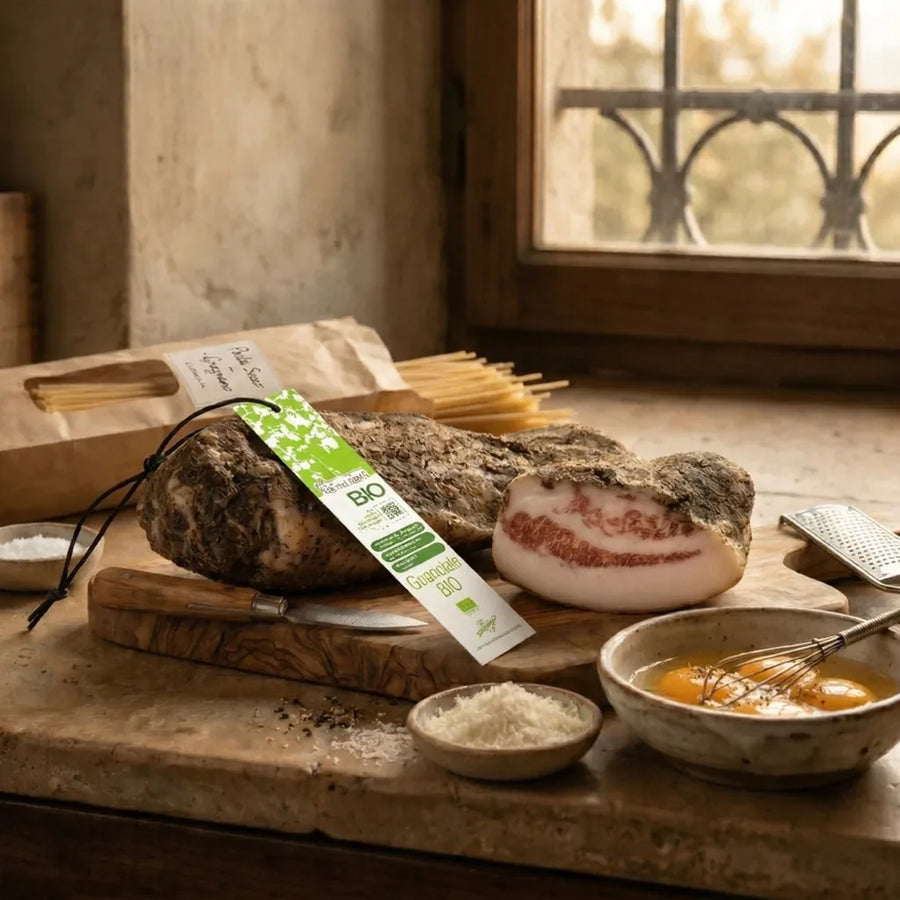
Guanciale is a cured meat and a staple of traditional Roman cuisine. Made from pork jowl or cheek, it is prized for its rich flavour, delicate aroma, and exceptional cooking qualities. Unlike bacon or pancetta, guanciale contains a higher proportion of firm, flavourful fat interwoven with lean muscle, creating a unique texture that becomes beautifully silky when cooked.
The production process has a history of centuries. Pork jowls are salted and seasoned with herbs and spices before being cured and aged for several months. During this maturation period, moisture gradually evaporates, concentrating the flavours and developing the distinctive character that makes guanciale so highly sought after.
Although best known as the defining ingredient in Carbonara and Amatriciana, guanciale is far more versatile than people realise. It can add depth, richness, and complexity to a wide range of dishes and is a favourite among high-profile chefs and home cooks around the world.
For anyone looking to buy guanciale, choosing an authentic product can make a remarkable difference in both flavour and cooking performance, bringing a genuine taste of Italy to your kitchen.
Introduction
Italy's culinary traditions are based on exceptional ingredients that create exceptional food. Few products embody this principle more perfectly than guanciale.
At first glance, guanciale may appear similar to other cured pork products. However, those familiar with Italian cuisine know that it occupies a category of its own. For centuries, Italian producers have transformed this humble cut into one of the country's most treasured delicacies.
Through careful salting, seasoning, and ageing, the pork jowl develops an extraordinary depth of flavour while retaining the qualities that make it ideal for cooking.
What Is Guanciale?
Guanciale is a traditional Italian cured meat made from the pork jowl, also known as the cheek. Its name derives from the Italian word guancia, meaning "cheek." Unlike pancetta, which comes from pork belly, guanciale is produced from a cut that contains a unique combination of fat and lean muscle.
The jowl is naturally rich in fat, but it also contains fine meat that contributes texture and flavour. This balance is one of the reasons guanciale is so highly valued by cooks.
After trimming, the pork jowl is rubbed with salt and a blend of spices that often includes black pepper, garlic, rosemary, sage, and other local aromatics. Exact recipes vary from region to region and from producer to producer, based on tradition and craftsmanship.
The meat is then left to cure and age, typically for at least three months. During this period, moisture evaporates slowly while the flavours become increasingly concentrated. The result is a cured meat with a delicate aroma, firm texture, and rich, savoury taste with subtle sweetness and gentle spice.
One of guanciale's defining characteristics is its exceptional quality fat. When heated, it melts gradually, releasing flavour while creating a silky texture that enriches sauces and other dishes. This quality explains why guanciale remains indispensable in many traditional Italian recipes.
Guanciale vs Pancetta vs Bacon
Because guanciale can sometimes be difficult to find outside Italy, many cooks consider using pancetta or bacon instead. While these products share similarities, there are important differences that affect both flavour and cooking performance.
| Feature | Guanciale | Pancetta | Bacon |
|---|---|---|---|
| Cut | Pork cheek/jowl | Pork belly | Pork belly |
| Production | Dry-cured | Dry-cured | Cured and usually smoked |
| Fat Content | Very high | Moderate to high | Moderate |
| Flavour | Rich, savoury, slightly sweet | Mild and delicate | Smoky and salty |
| Texture | Firm, silky when rendered | Softer | Meatier |
| Traditional Carbonara | Yes | Acceptable substitute | Not traditional |
| Traditional Amatriciana | Yes | Occasionally substituted | Not traditional |
The most significant distinction is the flavour of the fat. Guanciale contains denser, more flavourful fat than pancetta, while bacon's characteristic smokiness creates an entirely different taste profile.
Guanciale History and Tradition
The story of guanciale begins in the mountainous regions of Central Italy, particularly the area between Amatrice and Lake Campotosto in what was historically the Province of L'Aquila in Abruzzo. Although Amatrice now belongs to the Lazio region, it was part of Abruzzo until 1927, reflecting the close cultural ties to the local food traditions.
Like many cured meats, guanciale emerged from the practical need to preserve food before the advent of refrigeration. Rural communities relied heavily on pork as a source of sustenance, and every part of the animal was utilised. The cheek proved especially valuable because of its high fat content and excellent curing properties.
Over generations, producers refined their methods, combining salt, herbs, and extended ageing periods to create a product that was not only practical but exceptionally flavourful. What began as a preservation technique gradually evolved into a culinary tradition.
Authentic production remains closely connected to the traditions of Central Italy. Regional versions of guanciale may differ slightly in seasoning and preparation. Some producers favour a stronger pepper coating, while others use herbs such as rosemary or sage. These variations reflect local preferences rather than a completely different product.
How Guanciale Is Made

Producing high-quality guanciale requires patience, expertise, and attention to detail. Although modern facilities may offer greater control over temperature and humidity, the fundamental process remains rooted in tradition.
The journey begins with the selection of pork jowls. Producers seek cuts with a balanced ratio of lean meat to firm, well-developed fat, as this directly influences the final product's flavour and texture.
The jowls are then salted to initiate preservation. Salt not only protects the meat but also begins to draw out moisture, creating conditions that encourage flavour development. After salting, the meat is seasoned with herbs and spices. Black pepper is particularly common, though many producers also use garlic, rosemary, sage, and regional aromatics.
Following seasoning, the guanciale enters the curing stage. During this period, the salt penetrates the meat while moisture gradually evaporates. The process can take weeks before the product is transferred to ageing rooms or traditional cellars.
The maturation period typically lasts at least three months, although some artisan producers extend the ageing process significantly longer. As the guanciale matures, its texture becomes firmer and its flavour more concentrated. The result is a delicacy characterised by dense, creamy fat, vibrant lean meat, and remarkable aromatic complexity.
This slow transformation gives guanciale its distinctive character and explains why authentic products command such respect among chefs and food enthusiasts.
Why Guanciale Is Considered the Gold Standard
Many cured meats contribute flavour to dishes, but few influence the final result like guanciale. Its reputation rests largely on the unique qualities of the pork jowl fat. Compared with pork belly, the fat found in the cheek is denser, firmer, and more richly flavoured. Yet despite its firmness when cured, it melts readily when exposed to heat. This creates a luxurious texture that coats ingredients evenly while delivering an intense savoury richness.
The flavour itself is remarkably balanced. Initial notes of sweet cured pork are followed by deeper savoury characteristics and subtle hints of herbs and spices. Depending on the producer, there may also be a slight peppery finish that lingers pleasantly on the palate.
These qualities become especially apparent in traditional Roman pasta dishes. In Carbonara, for example, the rendered guanciale fat combines with egg yolk and Pecorino Romano to create the sauce's famous creamy texture. In Amatriciana, the same rendered fat forms the flavour base for tomatoes and cheese.
You don't need much guanciale to make an impact. A little added to a soup, a vegetable dish, or a sauce brings a depth of flavour that's hard to get any other way.
How to Choose and Buy Guanciale

As demand for authentic Italian ingredients grows, guanciale has become more widely available. However, quality can vary significantly, making it important to know what to look for.
The appearance of guanciale reveals a great deal about its quality. A properly cured piece has a clear contrast between bright pink meat and firm white fat. The fat should appear clean and dense rather than yellow, greasy, or overly soft. Visible marbling and a generous proportion of fat are positive indicators, as much of guanciale's flavour comes from this component.
Aroma is equally important. Quality guanciale should smell pleasant and delicate, with subtle notes of cured pork and spices. Strong sour odours or signs of excessive moisture may indicate poor storage or inferior production.
The simplicity of ingredients is often a good sign. Traditional guanciale generally contains pork jowl, salt, and natural seasonings. Products loaded with artificial flavourings, colourings, or unnecessary additives may not deliver the same authenticity.
Choose whole or half pieces rather than pre-sliced products. Whole guanciale retains moisture and flavour more effectively, allowing you to cut it according to your needs. It also tends to have a longer shelf life and provides a better indication of overall quality.
Cooking with Guanciale

Although guanciale is most famous for its role in Carbonara and Amatriciana, there is a lot more you can do with it. One of its greatest strengths is the way it cooks.
Unlike many other cured meats, guanciale requires no additional oil. When placed in a warm pan, its fat gradually renders, creating a rich cooking medium infused with savoury flavour. The lean portions become lightly crisp while the fat remains tender and silky.
This makes guanciale an exceptional ingredient for a wide variety of dishes. It adds depth to risottos, enriches soups and stews, and pairs beautifully with legumes such as beans and lentils. Roasted vegetables benefit from its richness, while potatoes and mushrooms provide ideal partners for its savoury character.
Guanciale can also be enjoyed in simpler ways. Thin slices served as part of a charcuterie board showcase their texture and flavour, particularly when paired with crusty bread, aged cheeses, and a glass of wine.
For pasta dishes, a serving of approximately 200 grams is typically sufficient for four people. Because the flavour is concentrated, a relatively small quantity can have a significant impact.
When it comes to wine pairings, young red wines often complement guanciale's richness beautifully. Sparkling wines can also work exceptionally well, their acidity and freshness providing balance against the richness of the rendered fat.
Recipes to try: Spaghetti alla Carbonara, Bucatini all'Amatriciana, Saffron Risotto, Bean Crostini, and Pea Crostini, all made with crispy guanciale.
Conclusion
Guanciale represents centuries of craftsmanship, regional identity, and culinary expertise in a single ingredient. Made from carefully selected pork jowl, seasoned with herbs and spices, and aged over several months, it delivers a depth of flavour and richness that few other cured meats can match.
Guanciale remains important for the gastronomic identity of Central Italy. It is the defining ingredient in some of the country's most famous dishes, such as Carbonara and Amatriciana, and has earned international recognition. It continues to be produced using methods that have changed remarkably little over centuries.
Guanciale's versatility extends well beyond these classics. Whether used to enrich pasta, soups, vegetables, or charcuterie boards, guanciale offers a unique combination of savoury intensity, delicate sweetness, and luxurious texture that has made it a beloved staple of Italian cuisine for generations.