
There is a particular kind of Italian generosity in a plate of crostini: a few honest ingredients, prepared with care, handed round before a meal properly begins. This pea version belongs to the cooler, brighter end of that tradition. A purée of sweet peas and mint sits against warm, crisp guanciale and salty shavings of Parmigiano Reggiano, the whole thing built on a slice of toasted country bread. It is spring on a board, and it takes barely half an hour.
What makes it sing is contrast. The purée is cool, green, and faintly sweet; the guanciale is hot, savoury, and rich; the cheese brings a salty, crystalline edge. Get those three things right and the crostino almost assembles itself.
Why the guanciale matters
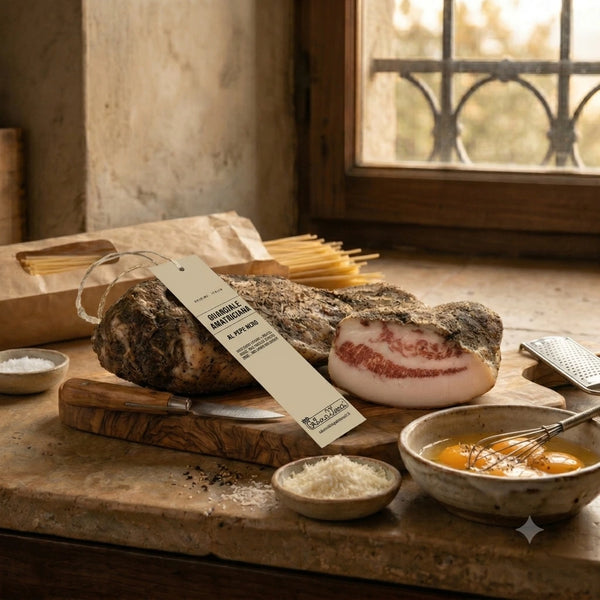
Guanciale is cured pork cheek, and here it does the heavy lifting that meat usually saves for a main course. Rendered slowly from a cold pan, it turns golden and crisp while releasing a deep, aromatic fat that carries far more flavour than pancetta or bacon ever could. The cheek has a softer, sweeter fat and a concentrated savour that is exactly what a delicate pea purée needs to lean against. We use the Pedrazzoli Carrobbio guanciale for this, cured the traditional way, and a small amount goes a long way.
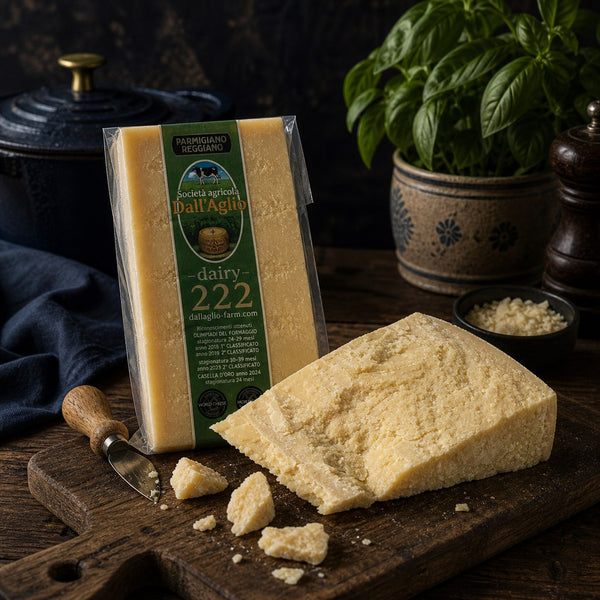
The Parmigiano Reggiano plays the closing note. Shaved rather than grated, it adds salt, a nutty depth, and that faint crunch of aged cheese against the soft purée. A well-matured Parmigiano, such as the Dall'Aglio, has the complexity to hold its own without overwhelming the peas. Together the two cured ingredients frame the sweetness of the vegetable rather than competing with it.
Ingredients
- 250g fresh or frozen peas
- 120g guanciale, cut into cubes or thick matchsticks
- 1 tablespoon extra virgin olive oil
- A few fresh mint leaves
- 50g Parmigiano Reggiano, shaved
- 8 slices rustic country bread
- Salt and freshly ground black pepper, to taste
A note on quantities: frozen peas are entirely welcome here and often sweeter than tired fresh ones, so do not feel you must wait for the season. The recipe scales cleanly; simply keep the purée loose and well seasoned, and add guanciale to taste, remembering its richness. If you prefer a milder herb, a little basil can stand in for the mint.
Equipment
- A small saucepan for blanching the peas
- A bowl of iced water for refreshing
- A blender or food processor
- A frying pan or skillet
- A slotted spoon and kitchen paper
- A vegetable peeler or sharp knife for shaving the Parmigiano
Method
- Blanch the peas. Bring a pan of salted water to the boil and cook the peas for two to three minutes, until tender and bright green. Drain at once and plunge them into iced water. Shocking them this way locks in the colour and stops the cooking, which keeps the purée fresh and vivid rather than dull and grey.
- Make the purée. Drain the cooled peas and tip them into a blender with the olive oil, mint leaves, a pinch of salt, and a grind of black pepper. Blend until smooth and creamy, loosening with a splash of water if needed. Taste and adjust, balancing the natural sweetness against the freshness of the mint.
- Render the guanciale. Place the pieces in a cold frying pan and bring it gently up to a low to medium heat. Rendering slowly from cold keeps the inside tender while the outside crisps and develops its deep savoury flavour. Once golden, lift the guanciale out with a slotted spoon and drain on kitchen paper, reserving a little of the rendered fat if you wish to drizzle it later.
- Toast the bread. Toast the slices until golden and crisp on the outside but still slightly tender within. You want the bread sturdy enough to carry the topping without shattering at the first bite.
- Assemble. Spread a generous layer of pea purée over each slice, top with the warm crispy guanciale, and finish with shavings of Parmigiano Reggiano. A light drizzle of the reserved guanciale fat adds extra depth if you like.
- Serve at once. These are best eaten immediately, while the purée is cool, the guanciale is warm, and the contrast of textures is at its peak.
Chef's notes and common mistakes
- Do not overcook the peas. Two or three minutes is plenty. Push them further and you lose both the colour and the sweetness that make the purée worth eating.
- Render from a cold pan. Throwing guanciale into a hot pan burns the outside before the fat has rendered. Start cold and let it come up slowly for an even, golden crisp.
- Season the purée boldly, then taste. Peas are sweet, and a purée under-seasoned tastes flat against the salty guanciale and cheese. Salt, pepper, and a little of the cooking liquid bring it into balance.
- Assemble at the last minute. Topped crostini soften quickly. Have everything ready and build them just before serving so the bread stays crisp.
Variations
This is a forgiving template once you have the method. A spoonful of ricotta folded through the purée makes it richer and more spreadable; a little lemon zest sharpens it for a hotter day. Some cooks leave a handful of whole blanched peas to scatter over the top for texture, while others swap the mint for basil or a few leaves of tarragon. The sweet pea also takes well to a grating of lemon or a few pea shoots as a garnish. What holds across every version is the balance: cool and sweet beneath, hot and savoury on top.
Make ahead and storage
The pea purée can be made up to a day in advance and kept covered in the refrigerator; press a little olive oil or cling film against the surface to keep it from oxidising and dulling. The guanciale can be rendered a few hours ahead and warmed briefly before serving. The bread, however, should be toasted at the last moment, and the crostini assembled only when you are ready to eat. Built and left to stand, they turn soggy quickly, so treat assembly as the final act rather than something to prepare ahead.
Serving and pairing
Serve these as an antipasto or alongside a glass of something cold and dry. A crisp Italian white, a Vermentino or a Gavi, mirrors the freshness of the peas, while a glass of Prosecco or a dry Franciacorta makes them feel like the start of a celebration. They also sit happily on a larger board with a few olives, some marinated vegetables, and more of the same bread, where they hold their own as the brightest, greenest thing on the table.