
Few dishes carry their reputation as heavily as carbonara. It is one of the four great pastas of Roman cooking, alongside cacio e pepe, amatriciana, and gricia, and the one most often misunderstood outside Italy. The authentic version contains no cream, no garlic, and no onion. Its silk comes from one place only: an emulsion of egg, hard sheep's cheese, rendered pork fat, and the starchy water the pasta was cooked in. Master that emulsion and you have a dish of extraordinary richness built from five honest ingredients.
What separates a memorable carbonara from a merely good one is the quality of the guanciale and the discipline to keep the eggs from scrambling. Everything below is written to get you to both.
Why the guanciale matters
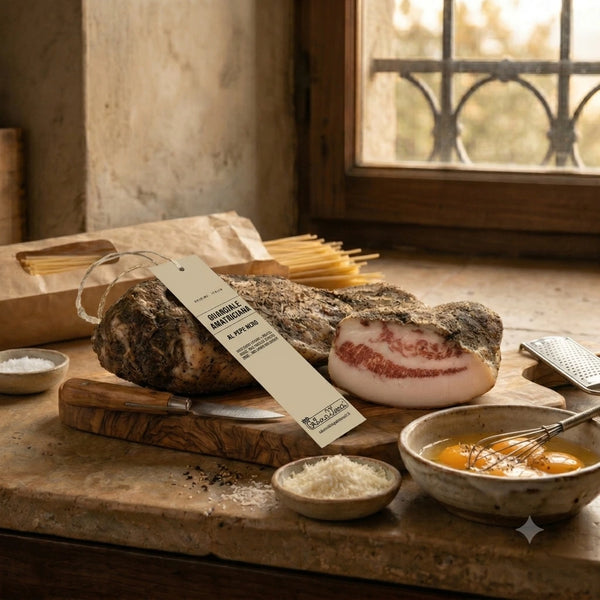
Guanciale is cured pork cheek, and it is the soul of this dish. As it renders in a cold pan brought slowly up to heat, it releases a deep, savoury fat that becomes the cooking medium and the backbone of the sauce. Pancetta or bacon will give you something pleasant, but it will not give you carbonara. The cheek has a softer, more aromatic fat and a concentrated flavour that no shortcut reproduces.
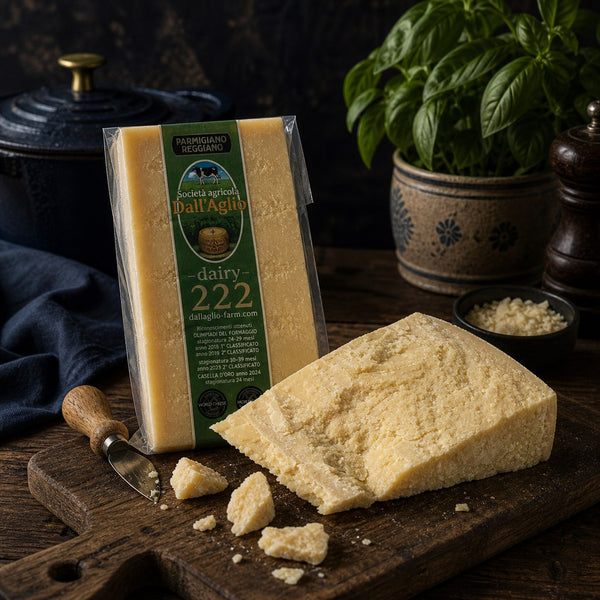
For the cheese, Pecorino Romano is traditional: sharp, salty, and unapologetically sheepy. Parmigiano Reggiano makes a rounder, milder sauce that many cooks prefer and that forgives a heavier hand. Both belong on the table. Use what you love, or blend the two.
Ingredients
- 400g spaghetti, or another long pasta such as tonnarelli or rigatoni
- 200g guanciale, cut into short, thin strips (lardons)
- 4 large egg yolks plus 1 whole egg, at room temperature
- 60g Pecorino Romano, finely grated, or Parmigiano Reggiano for a milder sauce
- Freshly ground black pepper, generously, to taste
- Salt for the pasta water, used sparingly (the guanciale and cheese are already salty)
A note on quantities: keep the egg-to-cheese ratio fixed and you can scale this dish up or down with confidence. One whole egg plus one yolk per person, with roughly 15g of cheese each, is the rule to remember.
Equipment
- A large pot for the pasta
- A wide frying pan or skillet
- A mixing bowl large enough to later hold the drained pasta
- A whisk and a fine grater or microplane
- Tongs, and a heatproof jug or mug for the reserved pasta water
Method
- Render the guanciale. Place the strips in a cold frying pan and bring it slowly to a medium heat. Letting the fat render gradually keeps the meat tender inside while it crisps. Once golden and aromatic, lift the guanciale out and set it aside, leaving every drop of fat in the pan.
- Make the sauce base. In your mixing bowl, whisk the egg yolks, whole egg, grated cheese, and a heavy grind of black pepper into a thick, sandy paste. This is the emulsion in waiting.
- Cook the pasta. Boil the spaghetti in lightly salted water until al dente. A minute before it is ready, reserve a full mug of the starchy cooking water. This water is not optional; it is the thing that brings the sauce together.
- Loosen the egg base. Whisk a spoonful or two of the hot pasta water into the egg mixture to warm it gently. Doing this off the heat is the single most important step for avoiding scrambled eggs.
- Combine off the heat. Drain the pasta and add it straight to the bowl with the egg base, tossing hard and continuously. Add reserved pasta water a little at a time until the sauce turns glossy and coats every strand. The residual heat of the pasta cooks the eggs into a cream; direct flame would curdle them.
- Finish and serve. Fold through the crisp guanciale and a last grating of cheese. Plate immediately, with another twist of black pepper on top. Carbonara waits for no one.
Chef's notes and common mistakes
- Never add the egg over direct heat. If the pan is on the flame when the eggs go in, you will make breakfast, not carbonara. Combine in the bowl, off the heat, every time.
- Reserve more water than you think you need. It is far easier to loosen a stiff sauce than to rescue a dry one.
- Go easy on salt. Between the guanciale and the Pecorino, the dish carries most of its seasoning already. Taste before you reach for the salt.
- Work quickly at the end. The emulsion is at its most beautiful in the first minute. Have your plates warm and ready.
Variations
Romans hold carbonara close, but a few honest adjustments are widely accepted. Tonnarelli, a fresh egg pasta, gives a more luxurious bite than dried spaghetti. Rigatoni catches the sauce in its ridges and is the choice of many trattorie. For a gentler, rounder result, blend Parmigiano Reggiano with the Pecorino rather than using one alone. What does not change: no cream, no garlic, no peas.
Make ahead and storage
Carbonara is a dish to eat the moment it is made; the emulsion does not survive long. That said, you can prepare every component in advance. Render the guanciale, grate the cheese, and separate the eggs ahead of time, then assemble only once the pasta is in the water. Leftovers can be refrigerated for a day, but reheat gently and expect the sauce to lose some of its silk. A splash of warm water and a low heat give it the best chance.
Serving and pairing
Serve carbonara on its own, the way Rome intends, followed by a simple green salad dressed with nothing more than good olive oil and lemon. For wine, a crisp Frascati from the hills outside Rome is the local and natural match; a dry Italian white or a light, bright red will all sit happily alongside the richness of the dish.