
Amatriciana is one of the four great pastas of Roman cooking, alongside carbonara, cacio e pepe, and gricia. It takes its name from Amatrice, a mountain town in the province of Rieti, and in its purest form it is a study in restraint: guanciale, tomato, Pecorino Romano, and pepper, with bucatini to carry it all. There is no onion and no garlic in the classical recipe. The depth comes instead from rendered pork fat and good tomatoes given time to concentrate.
What lifts a fine amatriciana above an ordinary tomato pasta is the interplay of the crisp, salty guanciale against the sweetness of the tomato, and the sharp, sheepy finish of the Pecorino. Get the guanciale right, give the sauce time, and reserve your pasta water, and the rest follows naturally.
Why the guanciale matters
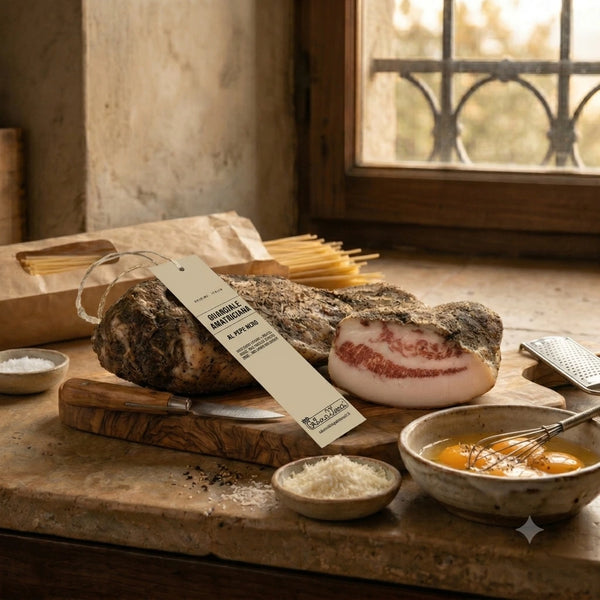
Guanciale is cured pork cheek, and it is the foundation of this dish. As it renders slowly in a cold pan brought gently up to heat, it gives up a deep, aromatic fat that becomes the base on which the entire sauce is built. The tomatoes cook in that fat, taking on a savoury richness that no oil and no other cut of pork can replicate. Pancetta or bacon will give you something agreeable, but it will not give you amatriciana. The cheek carries a softer, more perfumed fat and a concentrated flavour that does the work of the dish.
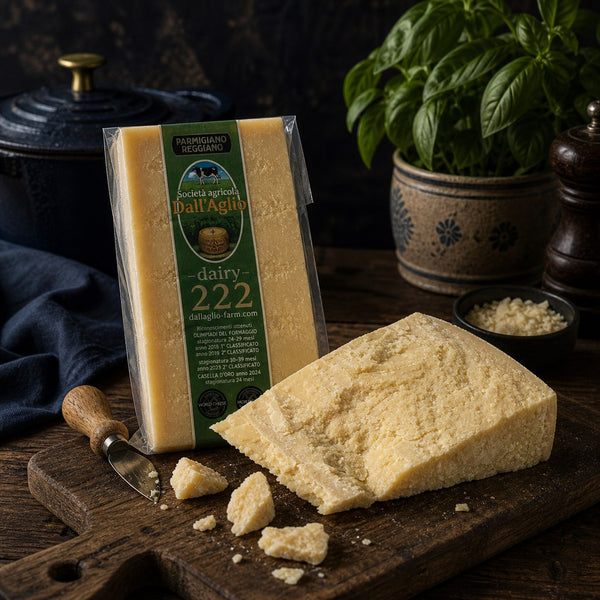
For the cheese, Pecorino Romano is traditional: sharp, salty, and unapologetically sheepy, the natural foil to the sweet tomato. Parmigiano Reggiano makes a rounder, milder finish that some cooks prefer and that forgives a heavier hand. Both have their place, so use what you love, or grate a little of each.
Ingredients
- 400g bucatini, or spaghetti if bucatini is unavailable
- 200g guanciale, cut into short strips
- 400g whole peeled tomatoes, San Marzano for preference, broken up by hand or with a spoon
- 60g Pecorino Romano, finely grated, or Parmigiano Reggiano for a milder sauce
- Freshly ground black pepper, generously, to taste
- A small pinch of dried chilli flakes, optional but traditional in many versions
- Salt for the pasta water only (the guanciale and cheese bring plenty of their own)
A note on quantities: the ratios scale cleanly. Reckon on roughly 100g of pasta, 50g of guanciale, and 100g of tomato per person, with around 15g of cheese each, and you can cook this for two or for eight with confidence.
Equipment
- A large pot for the pasta
- A wide frying pan or skillet, deep enough to hold the sauce and later the pasta
- A slotted spoon for lifting out the guanciale
- A fine grater or microplane
- Tongs, and a heatproof jug or mug for the reserved pasta water
Method
- Render the guanciale. Place the strips in a cold frying pan and bring it slowly to a medium heat. Letting the fat render gradually keeps the meat tender within while it crisps. Once golden and aromatic, lift the guanciale out with a slotted spoon and set it aside, leaving every drop of fat in the pan. That fat is your cooking medium.
- Build the sauce. Add the tomatoes to the pan of guanciale fat and break them up gently with a spoon into a rustic sauce. Simmer over a medium heat for 15 to 20 minutes, until the sauce thickens and the flavours concentrate. If you are using chilli flakes, add them now so their gentle heat infuses the whole sauce rather than sitting on top.
- Cook the pasta. Boil the bucatini in salted water until al dente. Reserve a full mug of the starchy cooking water before you drain, as this is what will bring the sauce to a silky finish.
- Marry pasta and sauce. Add the drained bucatini straight into the tomato sauce and toss over a low heat, adding the reserved pasta water a splash at a time. The starch in the water helps the sauce cling to every strand and turn glossy rather than sitting in a pool beneath it.
- Finish off the heat. Stir most of the crisp guanciale back through, keeping a few pieces for the top. Take the pan off the heat, then finish with the grated Pecorino Romano and a heavy grind of black pepper. Adding the cheese away from direct heat keeps it creamy rather than letting it seize into clumps.
- Serve at once. Plate immediately, scatter over the reserved guanciale, and add a final twist of pepper. Amatriciana is at its best the moment it leaves the pan.
Chef's notes and common mistakes
- Start the guanciale in a cold pan. A hot pan scorches the outside before the fat has rendered. A slow, gradual heat draws out the fat and crisps the meat evenly, which is the whole point.
- Give the tomatoes time. Fifteen to twenty minutes is not a suggestion. A rushed sauce tastes thin and sharp, where a properly reduced one is sweet and rounded.
- Go easy on salt. Between the guanciale and the Pecorino, the dish carries most of its seasoning already. Salt the pasta water, then taste before adding any more.
- Cheese off the heat. Stir the Pecorino in once the pan is off the flame. Added into a fiercely hot sauce, it tightens into rubbery knots instead of melting into the dish.
Variations
The classical amatriciana is held close in Rome, but a few honest adjustments are widely accepted. The chilli flakes are optional, included by many cooks and left out by purists, so follow your own taste. Spaghetti is the usual stand-in when bucatini is hard to find, and rigatoni works well too, its ridges catching the sauce. For a gentler, rounder result, blend a little Parmigiano Reggiano with the Pecorino rather than using one alone. What does not belong: onion, garlic, and cream.
Make ahead and storage
The tomato sauce is forgiving and rewards being made ahead. Render the guanciale and build the sauce up to the end of the simmer, then cool and refrigerate for up to three days, or freeze it for a month. Reheat gently while the pasta cooks, then combine and finish with the cheese as above. Fully assembled, amatriciana is best eaten straight away, though leftovers keep for a day in the fridge. Reheat them slowly with a splash of water to loosen the sauce.
Serving and pairing
Serve amatriciana as Rome does, on its own and followed by something simple, such as a green salad dressed with good olive oil. For wine, reach for a local red from Lazio: a Cesanese is the natural regional match, its bright acidity and gentle spice cutting through the richness of the guanciale. A medium-bodied Montepulciano d'Abruzzo, from the region the dish borders, sits just as happily alongside.