
A crab tartare is the quietest kind of luxury. There is no cooking to speak of, no sauce to reduce, no garnish that demands a steady hand. What it asks for instead is good ingredients and a little restraint: sweet white crab meat, ripe avocado, and a crown of caviar, layered so the three speak in turn rather than over one another. Built in a ring mould, it arrives at the table looking far more considered than the twenty minutes it takes to make.
This is a single, elegant portion, the sort of thing you might serve as a starter for one or assemble for yourself on an evening that deserves marking. Scale it up by the plate and it becomes a dinner-party opener that you can prepare ahead and finish in seconds. The discipline lies in handling each element gently, and in adding the caviar last so its pearls reach the plate whole.
Why the caviar matters
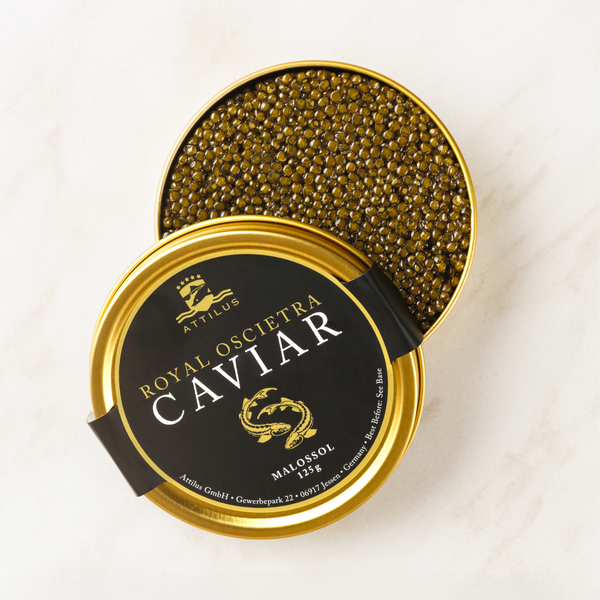
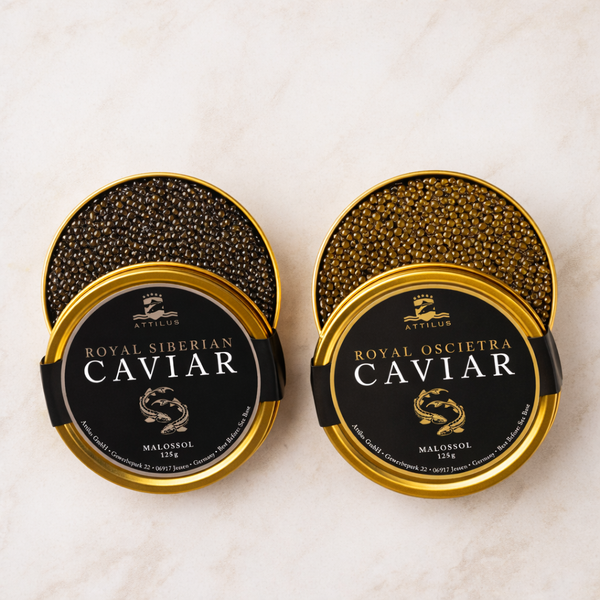
Caviar is the note that lifts this dish from a pleasant crab salad to something memorable. Attilus farms its caviar sustainably, and the quality shows in the texture: firm, glossy pearls that yield with a clean, briny pop rather than a salty rush. Royal Oscietra in particular brings a nutty, almost buttery depth that sits beautifully against the sweetness of the crab and the cool richness of the avocado.
Because the caviar is doing so much with so little, treat it with respect. Keep it well chilled until the moment it goes on the plate, and serve it with a mother-of-pearl, bone, or horn spoon rather than metal, which can lend a faint tinny edge to delicate roe. Add it last, and spoon rather than press, so the pearls stay intact and burst on the palate as they should.
Ingredients
- 120g cooked white crab meat, gently shredded and picked over for any fragments of shell
- 1 small ripe avocado, finely diced
- 1 tbsp Royal Oscietra caviar, kept well chilled until serving
- Fresh chives, finely chopped, to finish
- 2 thin lemon slices, to garnish
- 1 tbsp extra virgin olive oil
- Fine sea salt and freshly ground black pepper, to taste
A note on quantities and substitutions: this serves one, and it doubles or quadruples cleanly so long as you build each tartare in its own ring. Hand-picked white crab meat is worth seeking out over pasteurised tubs, as the flavour is sweeter and the texture less wet. If avocado is the issue, a finely diced, dressed cucumber gives a similar coolness with a crisper bite.
Equipment
- A ring mould, roughly 7 to 8cm across (a clean tin with both ends removed will stand in)
- Two small mixing bowls
- A fork for shredding and a sharp knife for the avocado
- A mother-of-pearl, bone, or horn spoon for the caviar
- A chilled serving plate
Method
- Season the crab. In a small bowl, gently combine the crab with a drizzle of olive oil, a pinch of salt, and freshly ground black pepper. Mix lightly rather than stirring hard, so the crab keeps its loose, flaky texture instead of turning to paste.
- Layer the base. Place a ring mould in the centre of a chilled plate. Press the seasoned crab into the bottom in an even layer. The chilled plate matters here: it keeps the avocado fresh and the whole dish at its best contrast of temperatures.
- Add the avocado. Spoon the diced avocado over the crab and press gently to create a compact second layer. A light hand keeps the avocado from bruising to a purée, leaving you distinct layers when the mould comes away.
- Top and finish. Carefully lift the ring straight up and away, so the sides stay clean and the tartare holds its shape. Crown with a small mound of crab and a generous spoon of caviar, added last and spooned gently so the pearls stay whole.
- Garnish and serve. Scatter chives over the top, set a lemon slice to the side, and serve immediately, while the contrast between cold crab and ripe avocado is at its best. This dish does not wait: the avocado dulls and the caviar warms if it sits.
Chef's notes and common mistakes
- Never overwork the crab. The pleasure of tartare is in its texture. Fold the seasoning through with a fork and stop the moment it is coated, or you will lose the flakes that make it special.
- Cut the avocado, do not mash it. A clean dice gives the dish structure and a cool, buttery bite. Reach for a ripe but firm avocado; an overripe one collapses the moment it is pressed.
- Mind the salt. Crab carries its own gentle saltiness and the caviar is briny, so season the avocado layer with a lighter hand than instinct suggests and taste as you go.
- Add the caviar at the very last second. Keep it chilled in its tin until the plate is otherwise finished, then crown with a non-metallic spoon. Warm caviar loses its firmness, and metal can flatten its flavour.
Variations
The frame of this dish welcomes small, thoughtful changes. A whisper of finely grated lemon zest or a few drops of yuzu through the crab brightens it further. Diced mango or pink grapefruit segments folded into the avocado layer bring a sweet, tropical lift that flatters the brine of the caviar. For a little heat, a pinch of finely chopped red chilli in the crab adds quiet warmth without overwhelming the roe. What should not change is the order of building and the gentleness throughout: crab below, avocado above, caviar last and barely touched.
Make ahead and storage
This is a dish to assemble and eat, not to keep. That said, you can do all the preparation in advance. Pick and season the crab, then cover and refrigerate it for up to a day. Dice the avocado only at the last moment, as it browns quickly once cut; a squeeze of lemon slows the change if you must prepare it slightly ahead. Build the tartare just before serving and crown it with caviar at the table. Once plated, it will not hold well, so resist the urge to make it early.
Serving and pairing
Serve the tartare on its own as a starter, with perhaps a few thin slices of toasted sourdough or a delicate cracker on the side to carry it. The richness of crab, avocado, and caviar calls for a drink with poise and acidity to cut through. A glass of well-chilled Champagne is the natural match, its fine bubbles and bright minerality echoing the brine of the roe. If you prefer still wine, a crisp Chablis or a dry, mineral white such as Picpoul de Pinet will sit just as happily alongside, refreshing the palate between each cool, briny mouthful.