
Some dishes are built, and some are simply assembled with care. This one belongs to the second kind. A smooth avocado purée, lifted with chilli, ginger, and candied lemon, carries a small mound of crab dressed in olive oil and soft herbs, and the whole thing is finished with a careful spoon of caviar. There is no cooking to speak of, which means there is nowhere to hide. Every element has to be good.
That is the appeal. In twenty minutes you can put together a starter that looks like restaurant work and tastes of clean, cold, well-balanced things. The technique is mostly restraint: season properly, taste as you go, and let the caviar have the last word.
Why the caviar matters
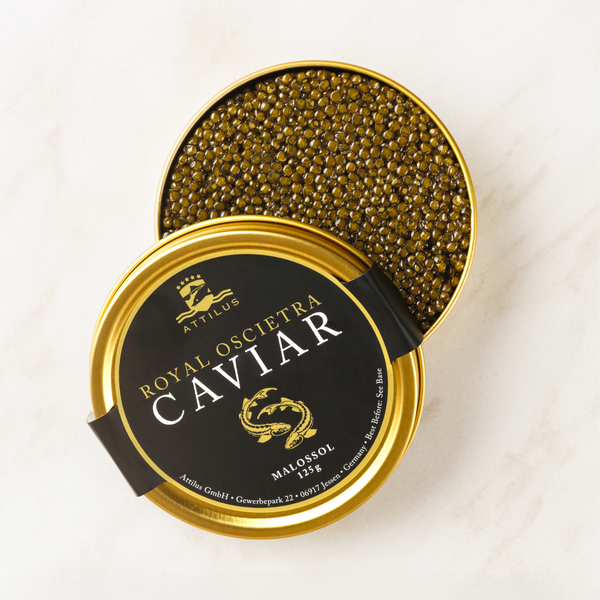
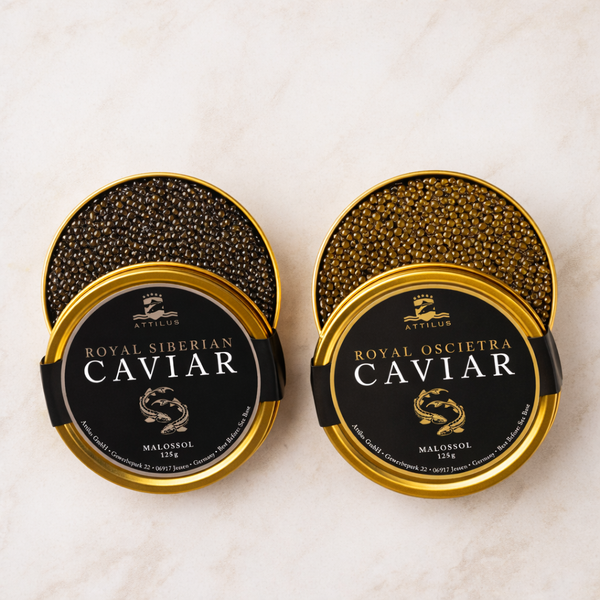
Caviar is the one ingredient here that you cannot improve in the kitchen. It arrives finished, and your job is to do nothing to spoil it. The Attilus Royal Oscietra is sustainably farmed and graded for a firm, glossy pearl with a clean, nutty, faintly briny flavour that rolls forward rather than shouting. Against the cool fat of the avocado and the sweetness of the crab, it provides the salt, the pop, and the saline finish that pulls the dish together.
Treat it gently and it rewards you. Keep the tin well chilled until the last moment, ideally nested in crushed ice, and lift the caviar with a mother-of-pearl, bone, or horn spoon rather than metal, which taints the flavour. Add it at the very end, with a light hand, so the pearls stay whole and burst on the palate rather than being crushed into the purée.
Ingredients
- 1 large ripe avocado
- 1 small red chilli, finely chopped, to taste
- 1 tsp candied lemon zest, finely chopped
- 1/2 tsp fresh ginger, finely grated
- 1/2 tsp Dijon mustard
- Juice of 1/2 lemon
- 1 tbsp extra virgin olive oil, for the purée
- 120g cooked white crab meat
- 1 tbsp extra virgin olive oil, for the crab
- Juice of 1/4 lemon, for the crab
- 4 fresh basil leaves, finely chopped
- 1 tsp fresh thyme leaves
- Fine sea salt and black pepper
- 2 tsp Attilus Royal Oscietra caviar, to finish
This serves two as a starter. The recipe scales cleanly: keep the crab dressing light and the seasoning honest, and you can build as many plates as you need. If candied lemon zest is hard to find, a little finely grated fresh zest with a pinch of sugar stands in well, and white crab meat from a good fishmonger is worth the small extra cost over tinned.
Equipment
- A bowl and a fork for mashing the avocado
- A second small bowl for marinating the crab
- A fine grater or microplane for the ginger
- A spoon or small palette knife for spreading the purée
- A mother-of-pearl, bone, or horn spoon for the caviar (not metal)
- Two chilled plates
Method
- Mash the avocado. In a bowl, mash the avocado with a fork until smooth and creamy. Season with salt, pepper, the lemon juice, and the olive oil. The acid does two jobs here: it brightens the fat and it keeps the green from dulling while you work.
- Lift it. Stir in the chopped chilli, candied lemon zest, ginger, and mustard. Taste and adjust. This is where the purée earns its place, so push the seasoning until it tastes lively rather than flat, then stop.
- Marinate the crab. Combine the crab with the olive oil, lemon juice, basil, thyme, salt, and pepper. Toss gently and let it sit for 5 minutes. The short rest lets the herbs and acid settle into the meat without breaking up its delicate flakes.
- Plate. Spread the avocado purée in a wide circle across the centre of each chilled plate. Mound the marinated crab in the middle. Chilled plates keep everything cold and sharp, which matters in a dish served raw.
- Crown and serve. Top with a careful spoon of caviar, lifted with a non-metallic spoon, and serve immediately. Add the pearls last and barely touch them, so they stay intact and burst as they are eaten.
Chef's notes and common mistakes
- Buy the avocado at its peak. It should yield to gentle pressure but not feel soft or stringy. An underripe avocado will not mash smooth, and an overripe one turns grey and bitter.
- Season the purée and the crab separately. Each needs its own balance of salt and acid. Remember that the caviar adds salt at the end, so stop a touch short rather than over-seasoning.
- Keep the caviar cold and last. Leave the tin on ice until the plates are ready. Warm caviar loses its snap, and stirring it through the dish wastes everything that makes it special.
- Do not over-handle the crab. Fold the dressing through gently. The goal is glistening, separate flakes, not a paste.
Variations
The frame here is generous. Swap the basil and thyme for dill and chervil if you want a cleaner, more northern note, or fold a little finely diced cucumber through the crab for crunch. A few drops of good olive oil and a pinch of flaky salt over the finished plate never hurt. You can also build the dish in a ring mould for a neater, more formal presentation, pressing the purée into a base and the crab on top before lifting the ring away. What stays constant is the order of flavours: cool avocado, sweet crab, saline caviar, in that sequence.
Make ahead and storage
This is a last-minute dish by nature, and it is at its best the moment it is plated. You can do the prep ahead: chop the chilli, zest, ginger, and herbs, and pick over the crab, all an hour or two in advance and kept covered in the fridge. Mash the avocado as late as you can, since it begins to discolour quickly even with lemon; pressing cling film directly onto the surface buys you a little time. The marinated crab will hold for an hour. Assemble, and add the caviar, only when you are ready to sit down.
Serving and pairing
Serve this cold, as a first course, with a little toasted sourdough or a few warm blinis on the side to carry the purée and the crab. For a drink, the saline edge of the caviar asks for something crisp and cold: a glass of brut Champagne is the natural choice, its acidity and fine bubble cutting cleanly through the avocado's fat. A well-chilled vodka, served neat in a small glass, is the more classic partner to caviar and works beautifully here. If you prefer still wine, a steely Chablis or a dry Riesling will sit happily alongside.