
Oysters and caviar together are almost absurdly luxurious, and yet the dish could not be simpler: a freshly shucked oyster, its liquor intact, crowned with a single pearl of caviar. Two of the ocean's greatest gifts, one briny and cool, the other salty and bursting, meet in a single glittering mouthful. There is nothing to cook and very little to do, which is precisely the appeal. This is a way of serving two superb ingredients rather than a recipe that alters them.
What matters instead is quality and restraint. The oysters must be alive, fresh and properly shucked; the caviar generous but not so heaped that it buries the oyster's own delicate flavour. A drop of acidity ties the two together, and beyond that the sea does the work.
Why the caviar matters
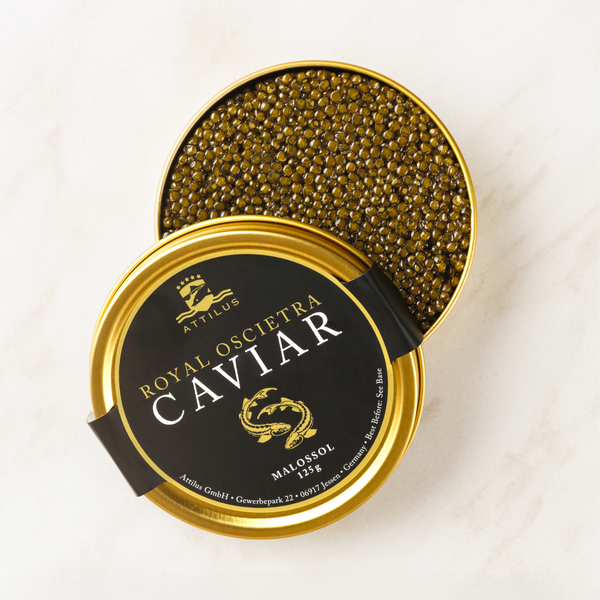
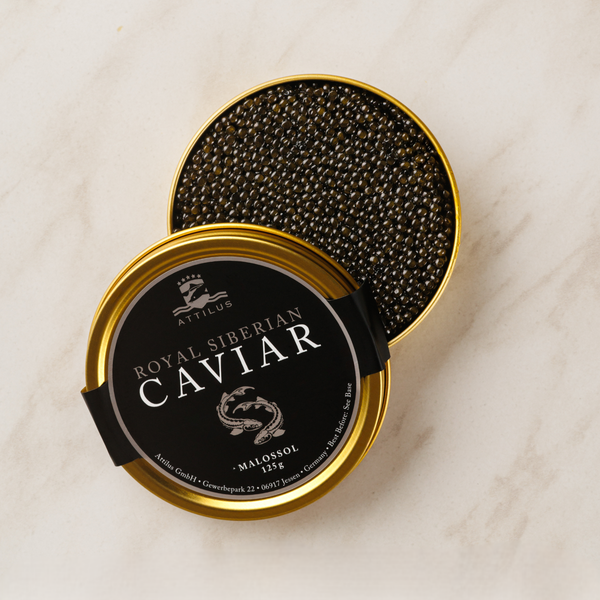
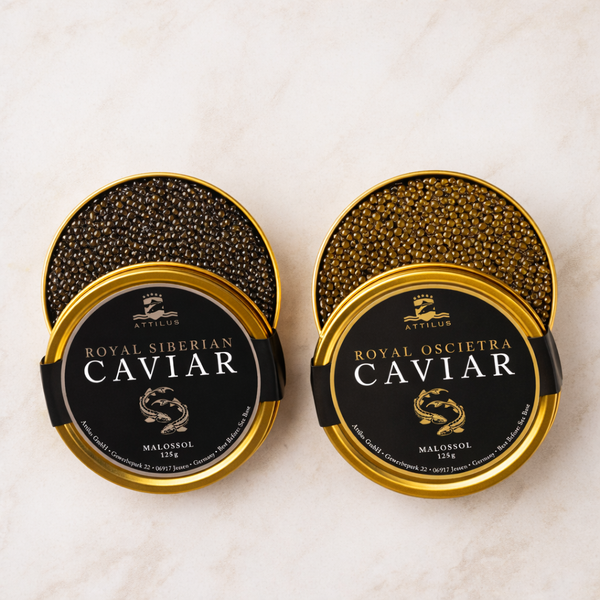
The caviar is what raises a plate of good oysters into an occasion. Its firm, saline pearls echo and amplify the oyster's brine while adding a richer, nuttier depth and a satisfying pop. A clean, elegant caviar such as Oscietra or Siberian is ideal, sitting like a jewel in the shell. Because nothing is cooked, freshness is everything: buy the caviar in good condition, keep it cold until the last second, and spoon it onto each oyster with a non-metallic spoon just before serving.
Ingredients
- 12 fresh oysters, in the shell
- 30 to 40g caviar
- 1 lemon, cut into wedges
- Crushed ice, to serve
- For an optional mignonette: 2 tablespoons red wine vinegar, 1 finely diced shallot, a little cracked black pepper
Equipment
- An oyster knife and a folded cloth
- A platter and crushed ice
- A non-metallic spoon for the caviar
Method
- Make the mignonette, if using. Stir the vinegar, shallot and pepper together and set aside to mellow while you shuck.
- Shuck the oysters. Holding each oyster in a folded cloth, work the knife into the hinge, twist to pop the shell, and slide the blade under the meat to release it, keeping as much of the liquor in the shell as you can.
- Set on ice. Nestle the shucked oysters on a bed of crushed ice so they sit level and stay cold.
- Top and serve. Add a squeeze of lemon or a few drops of mignonette to each oyster, then spoon a pearl of caviar on top with a non-metallic spoon. Serve at once, while everything is cold and glistening.
Chef's notes and common mistakes
- Keep the liquor. The briny juice in the shell is half the pleasure. Shuck carefully and do not tip it out.
- Only fresh, closed oysters. Discard any that are open and do not close when tapped. Freshness is non-negotiable when nothing is cooked.
- Do not drown the oyster. A little lemon or mignonette lifts it; too much hides both oyster and caviar. Restraint is the whole art.
- Caviar last, non-metal spoon. Add it just before serving so it keeps its pop and shine.
Variations
A spoonful of creme fraiche under the caviar softens the brine and makes each oyster richer. Some prefer a classic mignonette, others just lemon, and others nothing at all beyond the caviar; offer a choice and let people please themselves. For a warm version, very briefly grill the oysters with a little butter before topping with the caviar off the heat, though purists will keep them raw. Salmon caviar makes a bright, generous and more affordable alternative for a crowd.
Make ahead and storage
Oysters should be shucked as close to serving as possible, ideally within the hour, and kept cold on ice until they reach the table. The mignonette can be made a day ahead and improves as it sits. Keep the caviar chilled in its tin until the final moment. There are no leftovers to speak of, and shucked oysters do not keep.
Serving and pairing
Serve as a glamorous starter or a centrepiece for a celebration, on a platter of crushed ice with lemon wedges alongside. The classic partner is Champagne, whose acidity and bubbles are made for both oyster and caviar; a cold, mineral Chablis or a crisp Muscadet does the same job beautifully. Count on three oysters a head as a starter, more if they are the star of the evening.