
There is no dish that exposes its ingredients quite like spaghetti aglio e olio. Born in the kitchens of Naples, it is the supper a cook reaches for when the cupboard is nearly bare, and yet it can be one of the most quietly luxurious plates in all of Italian cooking. Garlic, olive oil, a little chilli, a handful of parsley, and pasta. That is the whole of it. With so few components, there is nowhere for a shortcut to hide.
What turns this humble assembly into something memorable is not a secret ingredient but a technique and a choice. The technique is the emulsion of oil and starchy pasta water into a glossy sauce. The choice is the oil itself, because here the olive oil is not a seasoning poured over the top. It is the sauce.
Why the olive oil matters
In most pasta dishes the oil is a supporting player. In aglio e olio it carries the plate. Half of the name is olio, and the oil makes up the body, the flavour, and the texture of the finished sauce, so its character is tasted in every mouthful. A flat, refined oil gives you a flat, refined plate. A living, peppery extra virgin oil gives you depth, a faint bitterness that balances the sweetness of the slow-cooked garlic, and a fragrance that lifts the whole bowl.
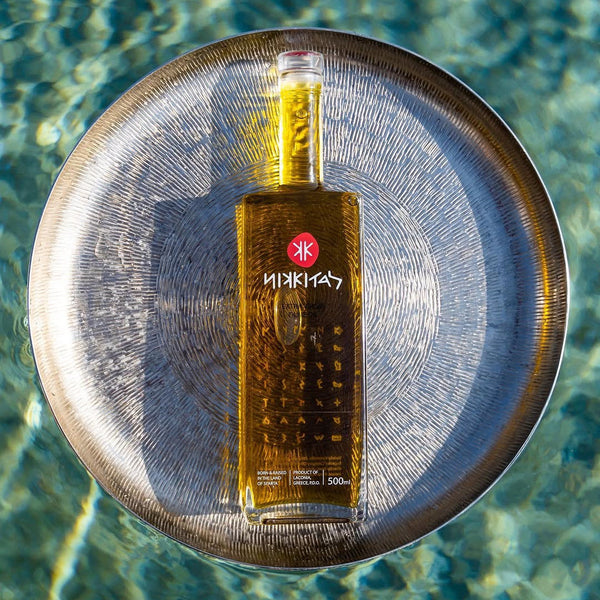
This is why a single-estate extra virgin oil earns its place here. The Nikkitas oil, pressed from olives grown on one estate in Sparta, brings the grassy, slightly peppery backbone that defines a good aglio e olio. It infuses gently as the garlic toasts, then emulsifies into the sauce and finishes the dish raw, poured over at the end where its aroma is at its most vivid. Use the oil you would happily taste from a spoon, because in this recipe you very nearly are.
Ingredients
- 400g dried spaghetti
- 120ml Nikkitas Extra Virgin Olive Oil, plus extra to finish
- 6 to 8 garlic cloves, very thinly sliced
- ½ tsp crushed red pepper flakes, adjusted to taste
- A small handful of flat-leaf parsley, finely chopped
- Fine sea salt, for the pasta water
- Freshly grated Parmigiano-Reggiano or Pecorino Romano, to serve (optional)
A note on quantities and scaling: this recipe serves two generously. The proportions hold cleanly as you scale, so think of it as roughly 200g pasta and 60ml oil per person. If you cannot find single-estate extra virgin oil, use the best peppery extra virgin you have, and never reach for a light or refined oil here, as there is nothing to mask its absence. Purists leave out the cheese, since aglio e olio is traditionally cheeseless, but it is offered for those who like it.
Equipment
- A large pot for the pasta
- A wide, deep frying pan or skillet (wide enough to toss the spaghetti)
- A sharp knife for slicing the garlic thinly
- Tongs for transferring and tossing the pasta
- A heatproof jug or mug for the reserved pasta water
Method
- Cook the pasta. Bring a large pot of generously salted water to a rolling boil, then add the spaghetti and cook until just shy of al dente, about one minute less than the packet suggests. The pasta finishes cooking in the pan, so pulling it early keeps it from going soft. Before draining, reserve a full mugful, around 250ml, of the starchy cooking water. That starch is what allows the oil and water to bind, so it is not optional.
- Toast the garlic. While the pasta cooks, warm the olive oil in a large, wide pan over a medium-low heat. Add the sliced garlic and chilli flakes and cook gently for 3 to 5 minutes, stirring often, until the garlic turns pale gold and fragrant. Low and slow is the rule here, because the gentle heat infuses the oil with sweet garlic flavour rather than burning it. Watch closely and lift the pan from the heat the moment the garlic threatens to brown, since burnt garlic turns acrid and there is no rescuing it.
- Bring it together. Using tongs, transfer the drained spaghetti straight into the pan with the garlic oil. Add about half the reserved pasta water and toss everything continuously over a medium heat. This is the heart of the dish. The agitation and the starch in the water force the oil and water to emulsify into a glossy, silky sauce that clings to every strand rather than sliding off. Add more pasta water a splash at a time if it looks dry, and keep tossing until the sauce turns creamy and coats the pasta.
- Finish and serve. Take the pan off the heat, fold in the chopped parsley, and taste for salt. Divide between warmed bowls and finish each with a generous drizzle of raw olive oil, which delivers the freshest hit of fragrance straight to the nose. Scatter with cheese if you like, and serve at once while the emulsion is still glossy.
Chef's notes and common mistakes
- Never let the garlic brown. The single most common ruin of this dish is burnt garlic. Keep the heat gentle, slice the cloves evenly so they cook at the same rate, and trust your nose. Pale gold is the target, not amber.
- Do not skip the emulsion. Tossing the pasta in the pan with starchy water is not optional finishing, it is how the sauce is made. Oil and water left to sit will separate, so keep the pasta moving until it turns creamy and glossy.
- Reserve more water than you think you need. It is far easier to loosen a tight sauce than to rescue a dry one, and a dish that looks slick in the pan will keep tightening on the plate.
- Salt the pasta water properly but taste at the end. The pasta water carries most of the seasoning, so make it well salted. The oil and any cheese add their own savour, so taste before adding more salt at the finish.
Variations
The classic is hard to improve on, but a few honest additions are welcome. A small tin of anchovies melted into the warm oil before the garlic gives a deep, savoury undertow without tasting of fish. A scattering of toasted breadcrumbs, the Neapolitan pangrattato, adds a welcome crunch and was the poor cook's stand-in for cheese. A little lemon zest folded in at the end brightens the whole bowl. For more heat, increase the chilli, and for a fuller dish some cooks add a handful of sautéed prawns or a fistful of rocket. What does not change is the foundation: good oil, gentle garlic, and the emulsion that binds them.
Make ahead and storage
Aglio e olio is a dish of the moment, and the emulsion is at its most beautiful in the first minute on the plate. There is little to prepare ahead beyond slicing the garlic and chopping the parsley, both of which can be done an hour or two in advance and kept covered. Leftovers will keep in the refrigerator for a day, though the sauce loses its gloss as it cools. To revive them, warm gently in a pan with a splash of water and a thread of fresh oil, tossing until the sauce comes back together. Avoid the microwave, which dries the pasta and breaks the emulsion.
Serving and pairing
This is a dish to serve on its own, in warmed bowls, with perhaps a green salad to follow and good bread to catch the last of the oil. It makes an honest supper and an elegant late-night plate in equal measure. For wine, reach for a crisp, mineral white that can stand up to the garlic and the peppery oil. A Greco di Tufo or Fiano di Avellino from Campania, the pasta's home region, is the natural match, while a dry Vermentino or a young Verdicchio will do the dish proud. If you prefer red, keep it light and bright, such as a chilled Frappato.