Caviar is one of those rare foods where the manner of eating is almost as important as the food itself. Here is exactly how to do it properly.
Before You Begin: 3 Things to Get Right
Temperature
Remove the tin from the refrigerator 5 minutes before tasting. Caviar served too cold mutes its aroma and flavour.
The Spoon
This is non-negotiable. Use only non-metallic utensils - mother-of-pearl is the gold standard, followed by bone, glass, or high-quality plastic. Metal spoons (including silver) react chemically and introduce a metallic bitterness.
The Setting
Taste caviar before anything else. Strong flavours - coffee, wine, cheese - will compromise your palate.
The Classic Hand-Tasting Method
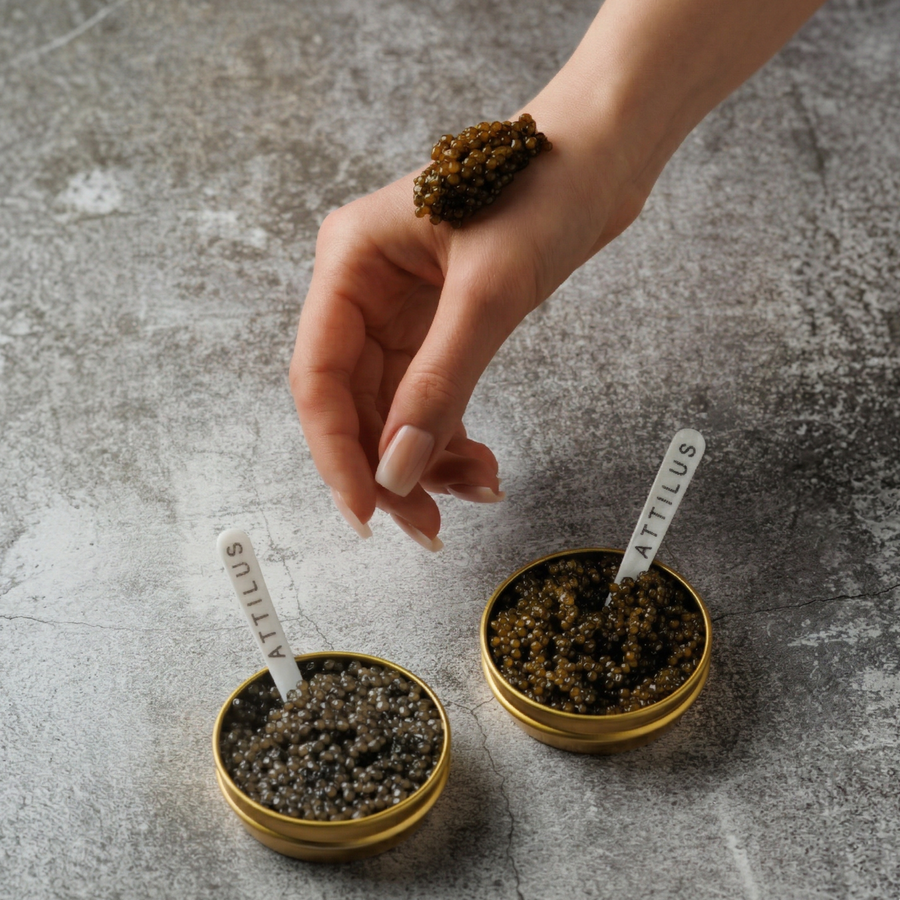
Place a small spoonful - roughly half a teaspoon - on the back of your hand between your thumb and forefinger.
Allow it to rest for 20-30 seconds. Your body heat gently warms the roe and releases its aroma. Bring your hand close to your nose and inhale. You should detect clean marine notes, perhaps a faint nuttiness.
Transfer the caviar to your lips, then press the pearls lightly against the roof of your mouth with your tongue. Do not chew immediately.
Notice the resistance first, then the 'pop' as the pearls burst. Flavour is released in stages.
After swallowing, premium caviar leaves a clean, pleasant aftertaste - often buttery or faintly of hazelnuts.
Three Tasting Rounds
First spoonful
Introduces the palate.
Second spoonful
Reveals complexity and aroma.
Third spoonful
Full appreciation and experiencing the caviar at its finest.
This is why chefs always plan for at least 30 grams per person - enough for three proper rounds of tasting. Less than this, and you are short-changing the experience.