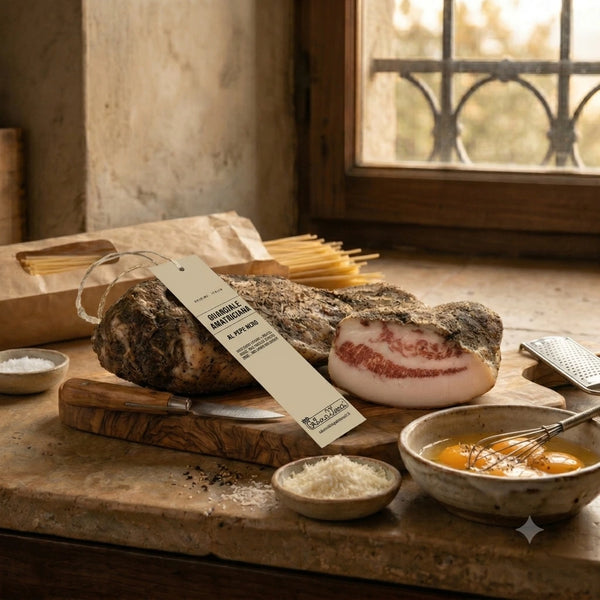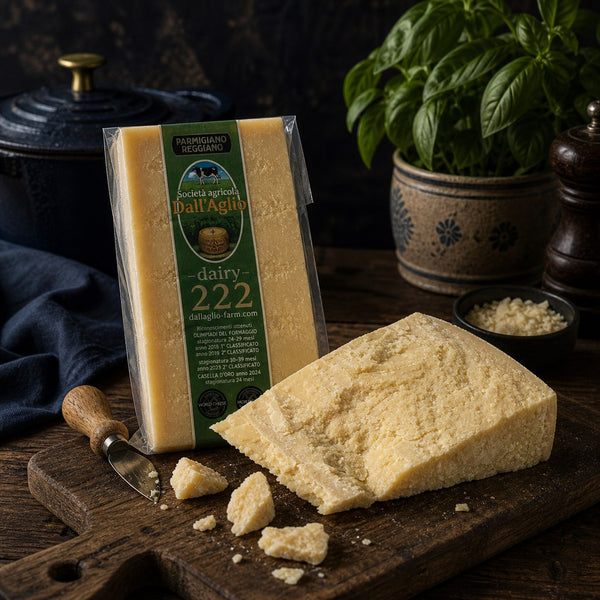

Pasta alla zozzona is Rome's most exuberant dish: the pasta that refuses to choose. Where gricia, carbonara, amatriciana and cacio e pepe each practise restraint, zozzona takes the guanciale and pecorino of gricia, the tomato of amatriciana, the egg yolks of carbonara, and adds sausage for good measure. The name comes from Roman dialect, zozzo, meaning dirty or messy, and it is meant with affection. This is the dish of trattorie in Testaccio, generous and unapologetic, and after decades in carbonara's shadow it is finally being discovered outside Rome.
For all its abundance, zozzona rewards the same discipline as its stricter siblings. The guanciale must render slowly, the tomato must be given time, and the egg yolks must never see direct heat. Do those three things and the result is remarkable: a sauce that is at once rich, sweet, sharp and silky, clinging to every ridge of the rigatoni.
Why the guanciale matters
Zozzona is built on two porks, and they play different roles. The sausage brings body and herbs; the guanciale brings the soul. Its slowly rendered fat is the medium in which the sausage browns and the tomato concentrates, and its crisp batons provide the punctuation on top. Skip the guanciale and you have a pleasant sausage pasta; include it and you have a Roman one. Cured cheek carries a sweeter, more aromatic fat than any belly cut, and in a dish this generous it is what keeps the richness tasting deliberate rather than heavy.
Ingredients
- 400g rigatoni (the traditional shape; its ridges are made for this sauce)
- 150g guanciale, cut into batons
- 200g Italian pork sausage, casings removed and crumbled
- 350g whole peeled tomatoes, broken up by hand
- 4 egg yolks, at room temperature
- 80g Pecorino Romano, finely grated, plus more to serve
- Freshly ground black pepper, generously
- Salt, sparingly, for the pasta water
Equipment
- A large pot for the pasta
- A wide, deep frying pan
- A mixing bowl for the yolk and pecorino cream
- A slotted spoon and a heatproof mug for pasta water
Method
- Render the guanciale. Start the batons in a cold pan over medium heat and let the fat melt out slowly until golden and crisp, 8 to 10 minutes. Lift the pieces out and set aside, leaving the fat behind.
- Brown the sausage. Crumble the sausage into the guanciale fat and cook until deeply browned, breaking it up as it goes.
- Build the sauce. Add the tomatoes, breaking them into the pan, and simmer over medium heat for 15 minutes until thickened and concentrated. Season with pepper only; the porks and cheese carry the salt.
- Make the yolk cream. In a bowl, beat the egg yolks with the grated Pecorino and a splash of cooled pasta water into a thick, smooth cream.
- Cook the rigatoni. Boil in lightly salted water until just short of al dente, reserving a full mug of cooking water, then transfer the pasta straight into the simmering sauce and toss for a minute to marry.
- Finish off the heat. Take the pan off the flame, wait thirty seconds, then fold through the yolk and pecorino cream, loosening with pasta water until glossy. Fold in most of the guanciale, plate, and top with the rest, more Pecorino, and a heavy grind of pepper.
Chef's notes and common mistakes
- The yolks never touch the flame. Exactly as with carbonara: off the heat, a short wait, constant tossing. Direct heat gives you scrambled eggs in tomato sauce.
- Two porks, two textures. Keep the guanciale crisp by adding it at the end rather than letting it stew in the sauce.
- Taste before salting. Between sausage, guanciale and Pecorino, zozzona rarely needs added salt at all.
- Rigatoni, not spaghetti. The sauce is heavy with sausage; it needs a shape with structure. This is one Roman pasta where long shapes genuinely do not work.
Variations
Zozzona is already the variation, the union of all four Roman pastas, so it tolerates little further improvisation. Some cooks add a splash of white wine to deglaze after the sausage browns, which is legitimate. A pinch of chilli is common. Onion appears in some Testaccio versions, though purists frown. Cream, as ever in Rome, does not belong: the yolks and pecorino are the cream.
Make ahead and storage
The sausage and tomato base, with the guanciale rendered separately, keeps refrigerated for three days and freezes well for a month. Reheat the base gently while the pasta boils, then finish with the yolk cream as above, always off the heat. Once assembled, zozzona is for eating, not storing; the yolk emulsion does not survive reheating gracefully.
Serving and pairing
This is a dish that wants little around it: a sharp green salad after, nothing before. For wine, its richness asks for structure with acidity: a Cesanese del Piglio from Lazio is the local answer, and a young Chianti Classico or Montepulciano d'Abruzzo does the same work. Zozzona is best in cold months, when its generosity feels like a virtue.