Honey has nourished and healed civilisations for thousands of years. It is a biologically active food created through remarkable cooperation between bees and blossoms, containing sugars, enzymes, organic acids, minerals, and powerful plant compounds. Long before refined sugar became common, honey was Europe’s principal sweetener, valued not only for flavour but also for preservation and medicine. Today, interest in honey is rising again - particularly raw, monofloral, and minimally processed varieties - as consumers rediscover its full functional potential.
Yet not all honey is the same. Floral source, geography, processing, and storage conditions all shape its composition, flavour, and bioactive profile. This guide explores how honey is made, its varieties, its health benefits, and how to choose the right type for your needs.
Our Honey Jar in Context
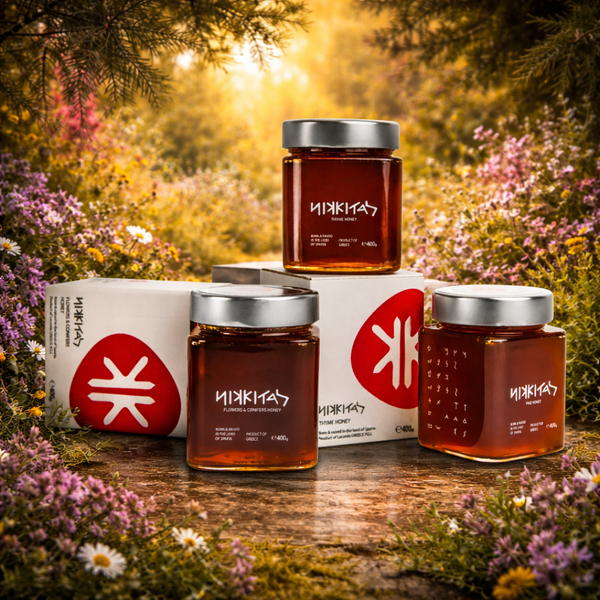
A 400-gram jar of honey represents an astonishing feat of nature and labour. To produce it, bees must visit roughly 2.3 million flowers, flying a combined distance of about 80,000 kilometres (50,000 miles). Considering that a single bee makes only half a teaspoon of honey in her lifetime, what seems like a simple jar on the shelf is actually the concentrated result of extraordinary effort and precision biology.
Honey is a complex blend of around 200 natural constituents: roughly 80% of its weight comes from 24 different sugars - primarily glucose and fructose - about 15–18% is water, and the remaining 3–5% contains enzymes, organic acids, proteins, plant pigments, minerals, vitamins, and other bioactive compounds. Just one tablespoon delivers around 22 calories and 17 grams of natural carbohydrate, providing quick, readily available energy.
How Honey is Made

Honey begins in a perfectly ordered bee society. A single colony can hold 30,000–60,000 bees, each with a precise role. At its heart is the queen – the only fertile female – laying up to 3,000 eggs a day in peak season while releasing a blend of pheromones that keeps the colony calm and unified. Surrounding her are thousands of female worker bees with distinct roles: nurse, housekeeper, builder, guard, and finally, forager. Drones, the fertile males, live briefly and exist for one purpose – to mate with a queen.
The process starts with a single forager that may visit up to 1,000 flowers in one trip, gathering the nectar that will ultimately become honey.
Inside the hive, workers maintain a steady temperature of 28–35°C by fanning their wings or clustering together. They also construct vertical sheets of wax honeycomb – double-sided panels of hexagonal cells. Some cells cradle developing bees; others hold nectar, pollen, and bee bread, the colony’s protein-rich fermented food. Nectar is the raw material of honey, but it is far from finished when a forager returns home. House bees take over, repeatedly regurgitating tiny droplets while enzymes break complex sugars into glucose and fructose. Each droplet is held in the warm hive air to evaporate excess moisture, reducing the water content to about 15-18% – low enough to prevent fermentation. Only then is the cell sealed with wax, preserving the honey as a stable, long-lasting food source.
A Brief History of Honey
For most of European history, honey was the principal sweetener. Aside from date, fig or maple syrup in certain regions, there were few alternatives. Across much of Europe, honey was not only a food but also a medicine, a preservative and a symbol of prosperity. Sugar cane had been cultivated in India for centuries, but it was introduced to the Mediterranean world after Alexander the Great encountered it during his campaigns in the 4th century BC. Even then, this exotic “honey reed” remained rare and costly in Europe. It was not until the 18th century, when sugar cane was mass-cultivated in colonies, and later sugar beet production developed, that sugar became widely accessible. As refined sugar grew cheaper, honey’s central role as the everyday sweetener gradually diminished.
Worldwide, honey production is approximately 1.4 million metric tons, with around 85% consumed directly as table honey and the remainder used by the food industry. Consumption patterns vary widely. Greece records the highest per capita intake at just under 2 kilograms per person per year, reflecting a strong culinary tradition. Meanwhile, the United Kingdom and Germany depend heavily on imports, sourcing approximately 85% and 90% of their honey supply, respectively.
While multifloral and blended honeys remain the most common on supermarket shelves, consumer preferences are evolving. Increasingly, health-conscious and selective buyers are choosing monofloral, raw and organic varieties, willing to pay a premium for distinctive flavour profiles and potential health benefits.
Selecting Your Honey
Commercial supermarket honey is typically a blended product, sourced from multiple regions and batches to achieve a uniform flavour and colour profile year-round. To improve clarity, reduce viscosity, delay crystallisation, and prevent fermentation, it is routinely heated after extraction and finely filtered. These processes enhance shelf stability and visual appeal, but they can also compromise delicate bioactive compounds.
Enzymes and volatile aroma compounds begin to degrade at temperatures above 40°C (104°F), while heating beyond 49°C (120°F) destroys enzymes completely. Most commercially available honeys are pasteurised at approximately 66°C (150°F) and are sometimes ultra-filtered to remain runny and clear for longer - a treatment that further removes pollen and diminishes enzymatic activity.
In contrast, true raw honey is minimally processed and gently handled at low temperatures, preserving its naturally occurring enzymes, organic acids, antioxidants, and microscopic pollen content. By retaining its full biochemical complexity and botanical specificity, raw honey expresses a more distinctive therapeutic profile shaped by its floral origin and environment.
The table below helps you understand the main honey types and their features:
| Raw Honey | Gently poured from the comb; not heated, filtered, creamed, or irradiated. Retains natural enzymes, aroma, and flavour, offering higher health benefits. Available from beekeepers, farmers’ markets, and speciality stores. |
| Organic Honey | Produced on certified organic land; free from pesticides and antibiotics. Bees fed only organic honey or sugar outside the nectar flow. Hives managed organically for ≥12 months, with untreated wax and timber. Certified for purity and sustainability. |
| Monofloral Honey | Predominantly from one plant species (≥45% nectar from a single source). Offers distinctive flavour and aroma, e.g., clover, pine, thyme. |
| Blended Honey | A mixture of honeys from multiple floral sources, sometimes from different countries. Balances flavour, lightens colour, and helps control crystallisation; widely available. |
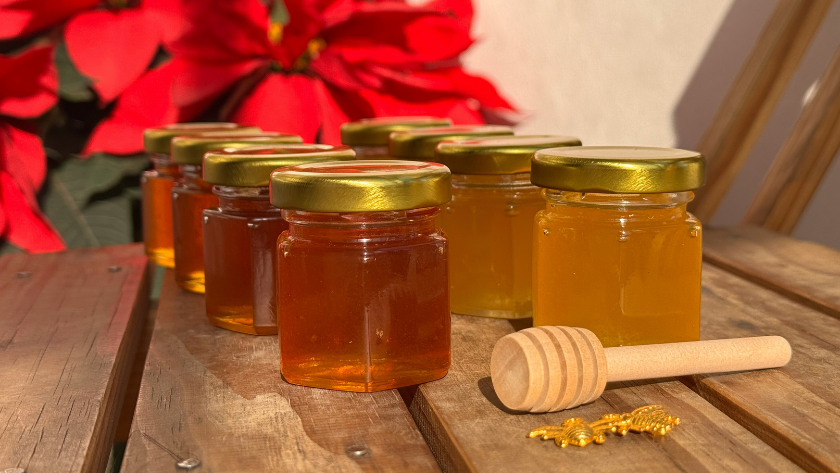
Honey is available in runny or thick forms, depending on the plant source, processing, and age. Runny honey is extracted by draining, pressing, or spinning in a rotary extractor. Thick honey may have crystallised naturally or been creamed for a spreadable texture.
| Colour | Honey exhibits a wide range of colours, from water-white to dark amber, with some varieties showing yellow, pink, red, green, blue, or even black tones. Colour depends on: (i) Nectar or honeydew source; (ii) Soil and seasonal conditions; (iii) Processing and storage. Darker honeys tend to be richer in minerals, acids, antioxidant flavonoids, and maltose, giving a stronger, less sweet flavour. Pale honeys have higher glucose, crystallise faster, and have a milder taste. |
| Consistency | Honey may be runny (uncrystallised) or thick (crystallised). Most honeys start runny but thicken over time. Factors affecting consistency include: (i) Glucose content (higher glucose = faster crystallisation); (ii) Other sugars: sucrose accelerates, maltose slows crystallisation; (iii) Honey type: darker or tropical honeys are generally lower in glucose and remain runny longer. Creamed honey is made by inducing fine crystallisation: processors pasteurise, seed with finely crystallised honey, and cool the mixture, producing smooth, spreadable honey without coarse crystals. |
| Clarity | Honey clarity depends on the presence of pollens, wax, propolis, bee parts, or dust: • Runny honey may appear cloudy due to pollens or microbubbles from crystallisation • Frosting at the edges is normal during crystallisation • Thick honey is usually opaque. |
Key Monofloral Honeys & Health Benefits

Monofloral honeys exhibit distinctive physicochemical and functional properties, making each variety unique in flavour, composition, and bioactivity.
No matter the flower source, raw, unheated honey offers several natural benefits:
- Quick, natural energy from glucose and fructose
- Natural antimicrobial action from enzymes that release small amounts of hydrogen peroxide when honey is diluted
- Antioxidants that help protect cells from oxidative stress
- Soothing effect for the throat
- Prebiotic support that helps nourish beneficial gut bacteria
- Small amounts of minerals, vitamins, and organic acids.
The twelve key monofloral honeys highlighted below - Manuka, Thyme, Pine, Buckwheat, Chestnut, Sidr, Heather, Acacia, Clover, Lavender, Orange blossom, and Eucalyptus - can be broadly considered in three groups based on their scientifically supported or traditionally recognised benefits:
- Honeys with the Strongest Scientifically Supported Health Profiles: Manuka, Thyme, Buckwheat, Chestnut, Pine
- Honeys with Moderate or Traditionally Recognised Benefits: Sidr, Heather
- Primarily Taste + General Honey Benefits: Acacia, Clover, Lavender, Orange blossom, Eucalyptus.
1. Honeys with the Strongest Scientifically Supported Health Profiles
These honeys contain higher levels of measurable bioactive compounds and show the strongest evidence of enhanced functional activity beyond basic honey benefits.
| Honey | Key Strength | What Makes It Different / Best For |
|---|---|---|
| Manuka honey | Targeted antibacterial activity | Contains high levels of methylglyoxal (MGO), giving strong non-peroxide antibacterial action; best suited for targeted antimicrobial use, particularly topical applications such as wound care support and infection management. |
| Thyme honey | Balanced antimicrobial + antioxidant | High phenolic content provides both antioxidant protection and natural antimicrobial strength; very antioxidant-rich (in some analyses up to 10× the antioxidant level of clover honey); fructose-rich. Traditionally used for digestive problems and wound infections; well-suited for daily immune-conscious wellness. |
| Pine honey | Mineral-rich + digestive support | Honeydew origin provides higher minerals and more complex sugars that may support gut bacteria; powerfully antimicrobial; traditionally used for general infection resistance; suitable for digestive balance and mineral support. |
| Buckwheat honey | Very high antioxidants | Dark, polyphenol-rich honey studied for cough soothing and oxidative stress support; reported up to 7-8x the antioxidant level of clover honey, rich in iron, minerals and amylase; good for antioxidant intake and respiratory comfort. |
| Chestnut honey | High minerals + antioxidants | Elevated mineral content and strong phytochemical profile; traditionally associated with support for circulation, respiratory and digestive health; beneficial for nutritional density and trace mineral intake. |
2. Honeys with Moderate or Traditionally Recognised Benefits
These honeys show promising antioxidant or antimicrobial activity and strong traditional use, though clinical research is less extensive than the group above.
| Honey | Key Strength | What Makes It Different / Best For |
|---|---|---|
| Sidr honey | Traditional medicinal reputation | Long valued in traditional medicine with moderate-to-high antioxidant activity; best suited for consumers seeking premium honey with historical wellness associations. |
| Heather honey | Dense antioxidant profile | Higher protein and colloidal content with good antioxidant levels; suited for those preferring rich, dark honey with moderate functional benefits. |
3. Primarily Taste + General Honey Benefits
These honeys provide the core natural benefits of raw honey - energy, mild antimicrobial activity, antioxidants, and prebiotic sugars - but do not stand out for exceptional antibacterial or antioxidant potency compared to darker varieties.
| Honey | Key Characteristic | What Makes It Different / Best For |
|---|---|---|
| Acacia honey | Very mild and light | High fructose content keeps it liquid longer and gives a delicate flavour; ideal for everyday sweetening without overpowering taste. |
| Clover honey | Classic balanced sweetness | Widely consumed light honey with a gentle flavour and moderate nutritional profile; excellent general-use table honey. |
| Lavender honey | Floral and aromatic | Notable for its fragrance and culinary appeal, mild antimicrobial and calming properties; traditionally associated with relaxation, insomnia and anxiety; best suited for flavour pairing rather than enhanced therapeutic effect. |
| Orange blossom honey | Light citrus notes | Mild antioxidant activity with bright flavour; traditionally valued for calming effects; good for tea, desserts, and light dishes. |
| Eucalyptus honey | Herbal flavour | Traditionally associated with respiratory comfort and soothing teas, it contains compounds such as pinocembrin; used in folk medicine for pain, coughs, colds and headaches; primarily valued for flavour with moderate functional benefit. |
Greek Honeys vs Manuka Honey: A Brief Comparison
Among global premium honeys, Manuka honey is often positioned as the medicinal benchmark due to its methylglyoxal (MGO) content and non-peroxide antibacterial activity.
However, Greek monofloral honeys - particularly Thyme and Pine honey - offer strong antioxidant density, mineral richness, and balanced antimicrobial properties.
While manuka honey excels in targeted antibacterial intensity, Greek honeys often deliver superior daily nutritional value and culinary versatility. The choice ultimately depends on whether one prioritises clinical-style potency or broad-spectrum functional nourishment.
Storage and Shelf Life

Honey is one of the few natural foods that can last virtually indefinitely when stored properly, thanks to its low water content, acidity, and natural enzymes. However, how you store it can significantly affect its texture, flavour, and even its functional benefits.
Light, Temperature, and Containers
Bright light can degrade glucose oxidase, the enzyme responsible for honey’s antimicrobial activity. To preserve its natural powers, store honey in a dark place or use an opaque or dark glass jar. Cool, stable room temperatures are ideal. Refrigeration is not harmful, but it often causes honey to thicken; for example, borage honey can develop a chewy, toffee-like texture when chilled.
Warm storage may darken honey and intensify its flavour. This happens because glucose decreases faster than fructose, making thick honey slightly more fluid over time. Conversely, freezing honey halts natural crystallisation and prevents other compositional changes, making it a reliable long-term storage option.
Crystallisation and Moisture
Crystallisation is a natural process influenced by honey’s sugar composition. Most runny honeys crystallise fastest at around 14°C / 57°F. If honey absorbs moisture from damp air, it can liquefy unexpectedly or even ferment, causing bubbling, cloudiness, or an off taste. Glass or glazed ceramic containers with tight lids offer the best protection, as plastic is more air-permeable and may allow unwanted moisture uptake.
Shelf Life and Functional Decline
While honey can remain safe and edible for years, some of its bioactive properties gradually diminish:
- Six months of storage can reduce antioxidant levels by about 30%.
- Two years may begin to diminish honey’s antibacterial power.
By storing honey carefully - away from light, in a cool, dry place, and in an airtight container - you can maximise both its shelf life and its health-promoting qualities, keeping your jar as close to “fresh from the hive” as possible.
Conclusion
Honey is one of nature’s most remarkable foods - a fusion of plant chemistry and bee biology. Whether raw, organic, blended, or monofloral, honey provides energy, enzymes, antioxidants, and antimicrobial properties in a single spoonful.
From antioxidant-rich Greek thyme and mineral-dense pine honey to clinically studied manuka honey, each variety offers a different functional profile. Understanding those differences empowers consumers to select honey not only for taste, but for purpose.
Ultimately, the value of honey lies in choosing the right type for your needs - whether that means daily nourishment, culinary excellence, or targeted antimicrobial support.